






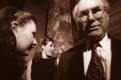



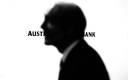
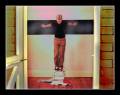

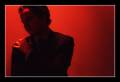






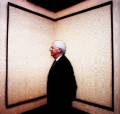
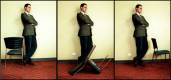










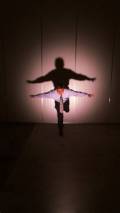


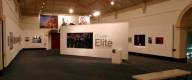
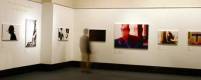
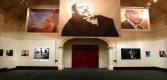
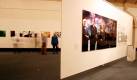
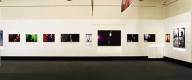
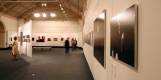


The Power Elite puts on exhibition for the first time a series of images published in the Australian Financial Review between 1995 and 2000. These striking photographs use experimental techniques to document the gladiators of the business arena. They testify to the Fin Review’s unique supportive environment which encouraged us to explore new digital techniques as newspaper photography moved out of the darkroom and into the now familiar world of scanners and computers.
Who are the power elite? They are individuals exhibited as images not as personalities. As ‘image’, they are Alan Fels (ACCC), Mark Burrows (Baring Brothers), David Clarke (Macquarie Bank), and Elizabeth Bryant (AXIOM), David Clarke from the Macquarie Bank, Rob Ferguson Bankers Trust or John Atanaskovic from Atanaskovic Hartnell. They are monumental, enlightened, indefatigable endowed with all the historical attributes of authority. However, their power as individuals is undermined by the collectivity. Static images of ‘life at the top’ are given satric. Swift-like overtones, able to be read as potent symbols of cultural wealth or poverty.
In this collision between art history’s and popular culture’s notions of portraiture, the ‘corporate creature’ raised to celebratory, almost mythic status without a Hollywood, a Wall Street or a Buckingham Palace the high profile worlds of politics and corporate fame have elements of stardom from celebrity cultures and taken them into the boardroom.
Australian tall poppies
Since the 1980’s corporate culture has provided the main stage for Australian tall poppies – simultaneously providing fodder for cultural critique and artistic inquiry, such as David Williamson’s Emerald City (1987). We set out with a similar sense of irony and edginess, while producing images of larger-than-life personalities for the business press.
The relationship between photographer and subject is paramount. Often we only have a short time to gain our subject’s trust and confidence. In The Power Elite there is an interplay of power between the subject (businessman, politician, philanthropist), the photographers (Mocnik + Young) and the media (Australian Financial Review).
Each stakeholder brings their own complex mix of personal, professional and cultural politics. What makes the images intriguing is the synthesis created via confrontation, negotiation and collaboration.
Fragmenting and Double Imaging
The subjects come adorned with the accoutrements of their sphere of influence, suits, skirts, a lapel mic, a place name at a business dinner – attributes which function art historically as symbols of character and status. Simultaneously, techniques such as fragmenting and double imaging impose a secondary reading a kind of photographic hypertext.
While historically the portrait is an elevated genre, in our hands itis undermined by the violent treatment of the image. Once two-dimensional, the subject is severed and Its profile weakened, its colour spectrum altered and it’s backdrop toyed with irrelevantly !
In this way, we introduce quirky elements to link these images to popular culture and colloquial imagery.
Historically, the process of transforming subjects into pictures involves a negotiation between artist and subject. We see this in very practical terms, the negotiation of power as a matter of due course, of testing the extent of our subjects’ compliance with direction in the name of art (or more specifically, in the name of their transformation into Art, via the camera and their posing).
Furthermore, a successful photograph cannot simply refer to a subject – it must also require a secondary ‘action’ of knowledge or of reflection (Roland Barthes, Camera Lucida UK, 1976). The picture must contain elements which the viewer can read as triggers or symbols, to take them beyond two eyes, nose, mouth, suit, boardroom — this of course depends largely on the viewer’s memories, experiences and imagination.
The status of the photograph thus engages the subject in a process of universalisation: transforming from particular to signifier. The subjects as 3D individuals cannot do this flattened out to the 2D picture plane, they can. In this way, the original subject secures a place in the viewers visual imagination.
Corporate Culture
This exhibition puts on display a selection from a vast collection of photographs produced for the Australian Financial Review – the site of potent interplays between media, corporate culture, public readership and consumption. We set out to explore an area of the cross disciplinary field of photography which we found both unique and exciting. We hope that the works intrigue on a purely visual level, while offering a multi-layered depth of field for the more interrogative viewer
Mocnik+Young, September 2004
State Library NSW